Avoid Surprise Water Damage Restoration Costs: U.S. $3,850, Vet Pros
Expect to pay around $3,850 on average for professional water damage restoration in 2026, with most homeowners landing between $1,300 and $6,400 depending on the job. Three things move that number more than anything else: the water category (clean versus contaminated), how many square feet got hit, and how fast you called someone after the leak started. Severe cases, especially sewage backups or flooded basements left standing for days, can climb into five figures. Get a moisture inspection scheduled within hours, not days, and you’ll likely land at the low end of that range.
TL;DR:
- Calling for professional help immediately after a water leak keeps costs toward the lower end of the typical $1,300 to $6,400 range, especially in small, clean water cases.
- Costs increase significantly with contaminated water, larger affected areas, or delays exceeding a few hours, often resulting in repairs costing $7,000 or more for severe cases.
- Insurance usually covers sudden water damage after deductibles of $500 to $2,500, but flood and sewer backups often require separate policies or endorsements not included in standard coverage.
- To avoid inflated bills, homeowners should document damage before demolition, get multiple estimates for jobs over $2,000, and verify contractor certification and licensing upfront.
- Mold growth can escalate job costs by thousands if water exposure is not addressed within 24 to 48 hours, making prompt response crucial.
Table of Contents
- What Drives the National Average Water Damage Restoration Cost
- Per-Square-Foot Pricing and How Water Category Changes the Math
- What’s Actually Inside a Restoration Bill
- Real Cost Scenarios by Room and Severity
- Insurance Basics: What’s Covered and What Comes Out of Your Pocket
- Why Speed Changes Your Total Bill
- Cutting Costs Without Cutting Corners
- A Practical Note on Getting Matched Fast
- Get Matched With Local Restoration Pros Through PNV Leads
- Where to Verify These Standards Yourself
- Sources
- FAQ
What Drives the National Average Water Damage Restoration Cost
That $3,850 figure isn’t pulled from thin air. It’s a blend of national pricing data from restoration companies and cost guides, including SERVPRO’s 2026 benchmarks, which put typical jobs between $1,300 and $6,400. Where you fall in that range depends on a few practical factors, not luck.
A job stays cheap when the affected area is small, the water is clean (think a supply line leak, not a sewer backup), and the drying crew shows up the same day. Costs climb fast once contamination enters the picture, once finished materials like hardwood floors or drywall need replacing rather than just drying, or once water sits long enough to soak into subflooring and wall cavities.
Before you call anyone, run through this quick mental checklist:
- How many square feet are visibly wet or affected?
- Is there any visible contamination, staining, or odor suggesting Category 2 or 3 water?
- How many hours has it been since the water intrusion started?
- Does your homeowners policy cover this type of loss, and what’s your deductible?
Answer those four questions honestly and you’ll have a realistic sense of whether you’re looking at a $500 mitigation job or a $10,000 rebuild.
Per-Square-Foot Pricing and How Water Category Changes the Math
Restoration pricing splits into two buckets: mitigation (extraction and drying) and repair or rebuild (replacing materials that couldn’t be saved). They get quoted differently, and mixing them up is the fastest way to misread an estimate.
Mitigation work, according to national pricing benchmarks, typically runs $3 to $7.50 per square foot depending on water category. Category 1 (clean water, like a supply line) sits at the low end. Category 3 (sewage, floodwater, or anything with contaminants) pushes toward the top of that range because it requires antimicrobial treatment, extra protective equipment, and often disposal of porous materials that can’t be sanitized.
Repair and rebuild costs run separately, and they’re where a modest mitigation job can turn into a serious bill:
- Drywall replacement typically costs $1.50 to $3.50 per square foot installed and finished.
- Flooring replacement ranges widely, from $2 per square foot for basic carpet to $15 or more for hardwood.
- Subfloor replacement often runs $20 to $50+ per square foot once you factor in demolition, structural drying, and new material.
Here’s how that plays out on a 500 square foot area. At Category 1 mitigation rates, you’re looking at roughly $1,500 to $2,250 just for extraction and drying. Bump that to Category 3, and mitigation alone jumps to $3,000 to $3,750, before a single sheet of drywall gets replaced.
What’s Actually Inside a Restoration Bill
A restoration invoice isn’t one flat number. It’s a stack of line items, and knowing what they are helps you spot a fair estimate from an inflated one.
Most mitigation-phase bills include:
- Emergency response and initial assessment
- Water extraction (pumps, vacuums)
- Structural drying (air movers, specialty drying equipment)
- Dehumidification
- Daily moisture monitoring, usually logged over several days
- Antimicrobial or antibacterial treatment for Category 2/3 water
- Selective demolition (removing wet drywall, baseboards, flooring)
- Contents handling, packing, and storage
- Debris disposal
Repairs, permits, and temporary housing typically show up as separate line items added after drying is complete, not bundled into the initial mitigation quote. That’s normal. What’s not normal is a vague scope with no itemized breakdown, or a sudden “full rebuild” recommendation before moisture readings even come back.
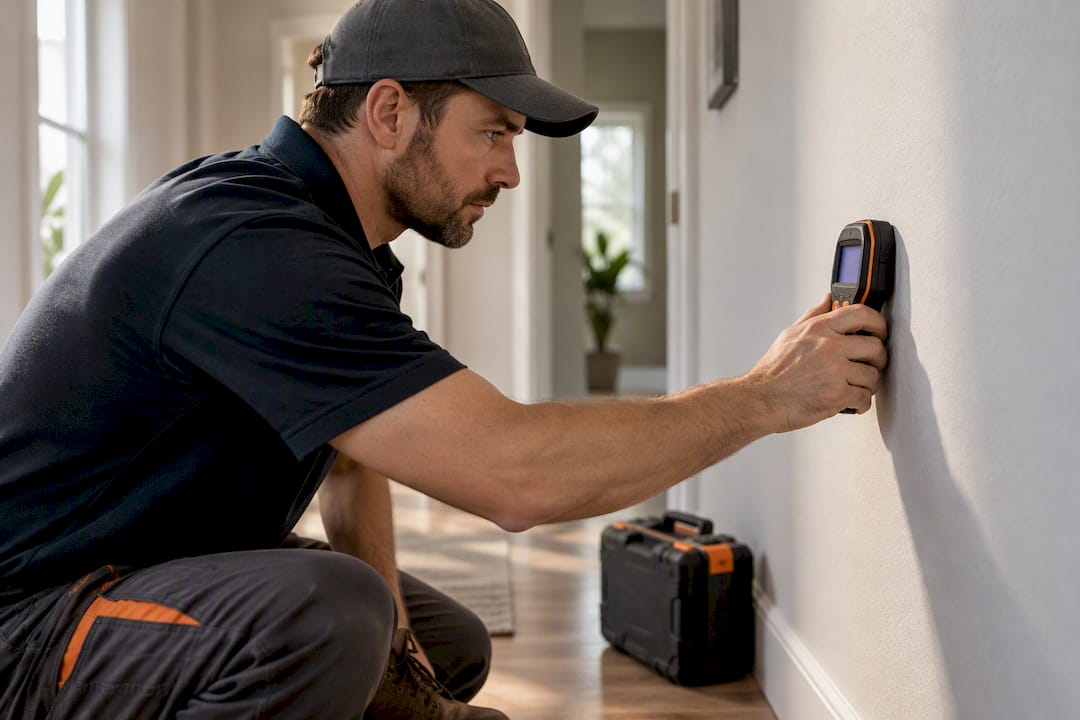
Pro Tip: Ask for moisture readings in writing before agreeing to any demolition. A contractor who wants to tear out walls without documenting wet readings first is either padding the bill or skipping the diagnostic step that protects you from over-scoping the job.
Real Cost Scenarios by Room and Severity
Numbers land differently depending on where the water shows up in your house.
- Small clean-water leak, one room: A supply line under a bathroom sink leaks overnight. Caught fast, this typically runs $500 to $1,500, covering extraction, drying, and maybe a section of baseboard.
- Appliance leak, multiple rooms: A washing machine overflow that spreads into a hallway and adjacent bedroom often lands between $1,500 and $4,000, factoring in Category 2 treatment and some flooring replacement.
- Basement flood, finished space: This is where costs escalate. Standing water in a finished basement means soaked carpet, drywall, and possibly furniture. Add mold risk from the humid environment, and totals often run $5,000 to $15,000.
- Sewage backup, Category 3: Biohazard handling, mandatory disposal of porous materials, and full antimicrobial treatment push these jobs to $7,000 to $20,000 depending on square footage.
- Whole-home events: Burst pipes while you’re away for a week, or major flooding, can exceed $20,000 once structural repairs, mold remediation, and full contents replacement enter the picture.
Insurance Basics: What’s Covered and What Comes Out of Your Pocket
Most standard homeowners policies cover sudden and accidental water damage, like a burst pipe or an appliance failure, but deductibles typically range from $500 to $2,500 depending on your policy. That’s the first chunk you’ll pay regardless of what insurance covers.
Where homeowners get caught off guard is coverage gaps:
- Flood damage from rising water, storm surge, or heavy rain is not covered by standard homeowners policies. You need separate flood insurance through FloodSmart and the National Flood Insurance Program, or a private flood policy.
- Sewer backup is often excluded unless you’ve added a specific endorsement, which usually costs relatively little annually but caps payouts far below a full claim.
- Gradual damage, like a slow leak that caused rot over months, is typically denied outright since insurers require the damage to be sudden.
To estimate your real out-of-pocket cost, add your deductible to whatever falls outside covered categories, plus factor in whether filing a claim is worth it. Insurance industry data shows homeowners file a meaningful volume of water-related claims every year, and insurance statistics from the III show sewer backup coverage remains a commonly skipped add-on, one that catches people off guard when a backup happens.
Why Speed Changes Your Total Bill
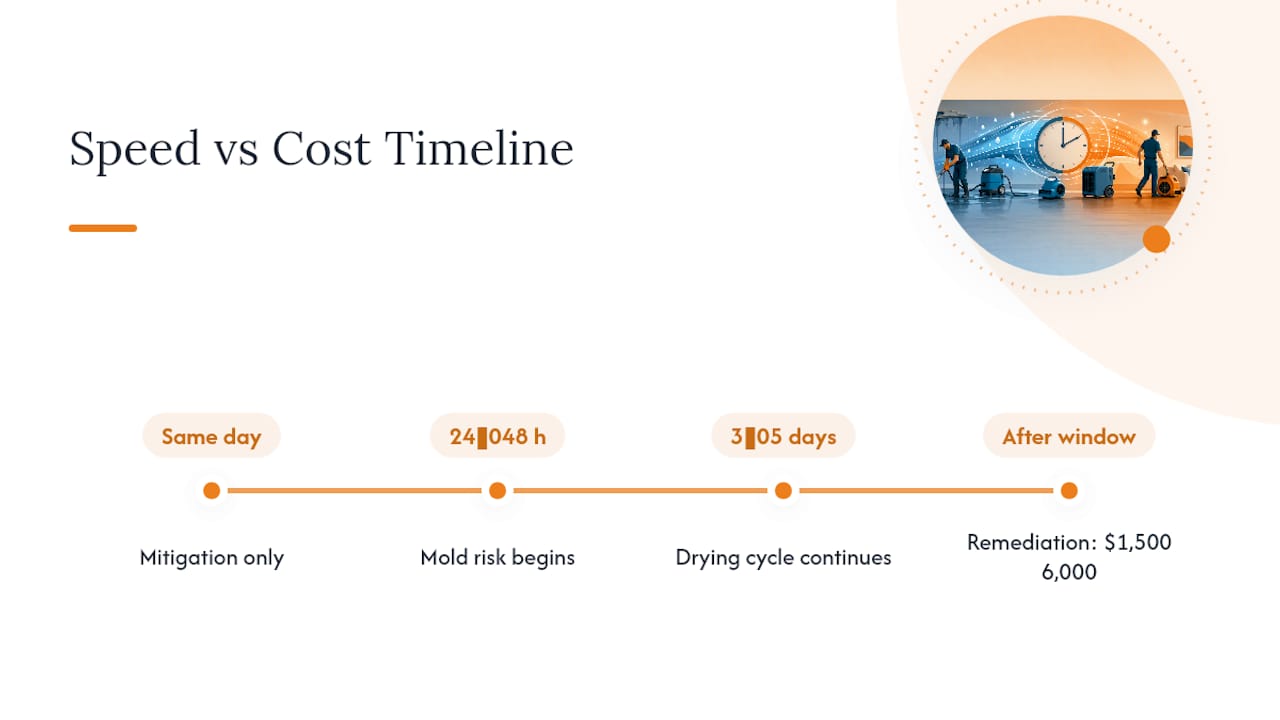
Mold can begin growing within 24 to 48 hours of water exposure, according to EPA guidance, and once it takes hold, your restoration job changes category entirely.
Standard drying cycles run 3 to 5 days with continuous equipment monitoring. Miss that window and mold enters the picture, adding remediation costs that commonly run an extra $1,500 to $6,000 depending on how far it’s spread through wall cavities or flooring. A same-day call keeps you in mitigation-only territory. A delayed one turns into mitigation plus remediation, and that gap is almost entirely preventable.
Cutting Costs Without Cutting Corners
The fastest way to control your bill is stopping the damage from spreading before a professional even arrives.
- Shut off the water source and move furniture or valuables out of the affected area immediately.
- Photograph everything before cleanup starts. This documentation matters for insurance claims.
- Call your insurer early to confirm coverage before work begins, not after.
- Vet contractors by asking about licensing, IICRC certification, their specific drying plan, and whether the estimate is written or verbal.
- Ask about after-hours fees upfront, since emergency response outside business hours often carries a premium.
Watch for red flags: no moisture readings, a scope that stays vague no matter how many times you ask for specifics, or pressure toward full demolition before drying has even been attempted.
Pro Tip: Get two estimates when the job exceeds $2,000. Pricing on mitigation work varies more than most homeowners expect, and a second quote often reveals whether the first one padded the scope.
A Practical Note on Getting Matched Fast
Paulo Vieira has spent years covering home services and contractor markets, and one pattern holds up: homeowners who get multiple local quotes within the first day pay less overall than those who call one name and wait. Platforms like PNV Leads exist because speed and comparison both matter here, not just after the fact.
— Paulo Vieira
Get Matched With Local Restoration Pros Through PNV Leads
Every hour you spend searching for a contractor is an hour water keeps spreading and your final bill keeps climbing. Some online services allow you to post your project once and get matched directly with local restoration professionals in your area, so you can compare responses and talk specifics instead of cold-calling a list of names found in a search.

Posting a project takes a few minutes. Describe the damage, your location, and what you need, and some platforms connect you with professionals who work in your service category and area. You then discuss project details, timelines, and estimates directly, without a generic listing standing between you and the person doing the work.
That said, matching you with a professional isn’t the same as vetting them completely. Confirm licensing and IICRC certification yourself, and read every estimate closely before signing. Post a project on PNV Leads and start comparing local restoration quotes today.
Where to Verify These Standards Yourself
For mold health guidance and cleanup safety steps, check the EPA’s mold and flood cleanup resources. For water category definitions and certified-firm standards, visit IICRC’s certification directory. For flood insurance basics, start with FloodSmart, the NFIP’s consumer resource.
Sources
- Can mold cause health problems? | EPA
- IICRC Certified Firms | IICRC
- How Much Does Water Damage Restoration Cost? | SERVPRO
- FloodSmart — NFIP (FEMA)
FAQ
Is Water Damage Restoration Worth the Cost?
Yes, in nearly every case. Skipping professional drying to save money almost always costs more later, since undetected moisture leads to mold growth, rotted subflooring, and structural repairs that dwarf the original mitigation bill.
How Much Will Insurance Pay for Water Damage?
Standard homeowners policies typically cover sudden, accidental water damage after your deductible, which usually runs $500 to $2,500. Flood damage and often sewer backup require separate coverage through NFIP flood insurance or specific policy endorsements, so check your policy language before assuming a claim is covered.
How Hard Is It to Fix Water Damage in a House?
It depends entirely on scope. A small clean-water leak caught within hours is a straightforward one- to two-day mitigation job, while a Category 3 sewage event or a flooded basement left standing for days involves demolition, mold remediation, and multi-week rebuild timelines.
How Much Does It Cost to Remove Moisture From Walls?
Drying out wall cavities without demolition typically falls within standard mitigation pricing of $3 to $7.50 per square foot, depending on water category. If moisture has already caused visible damage or mold behind the drywall, expect additional selective demolition and remediation costs on top of that base rate.